
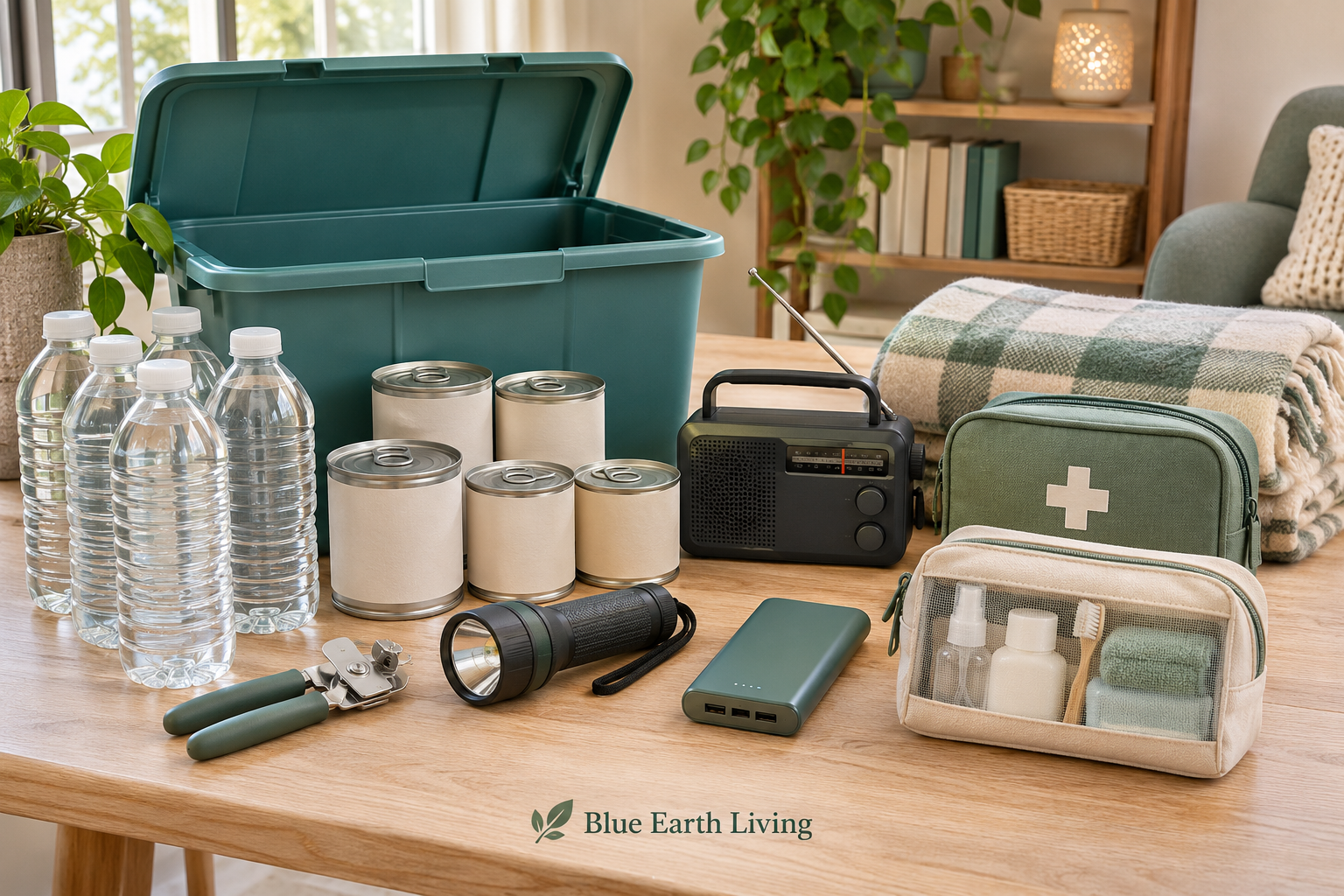
While we all enjoy warm, sunny days in our own corners of the world, recent extreme weather has reminded us how quickly conditions can change—sometimes within hours. Communities around the globe have experienced storms, flooding, and sudden temperature shifts that disrupt everyday life. At Blue Earth Living, we encourage everyone to keep emergency preparedness kits in their homes and vehicles, along with a clear household plan, so they can respond quickly when conditions change.
A familiar neighborhood can feel very different when heavy rain floods roads, strong winds interrupt electricity, or temperatures become dangerous. Preparing ahead gives you time to make thoughtful decisions and helps you care for the people and animals who depend on you.
Start with the hazards most likely where you live. Your kit and plan should reflect your climate, household needs, transportation options, and instructions from local emergency officials. At the bottom of the post, we have listed various preparedness items that government agencies and non-profit organizations advise people to have in their kits.
Build a Home Emergency Kit
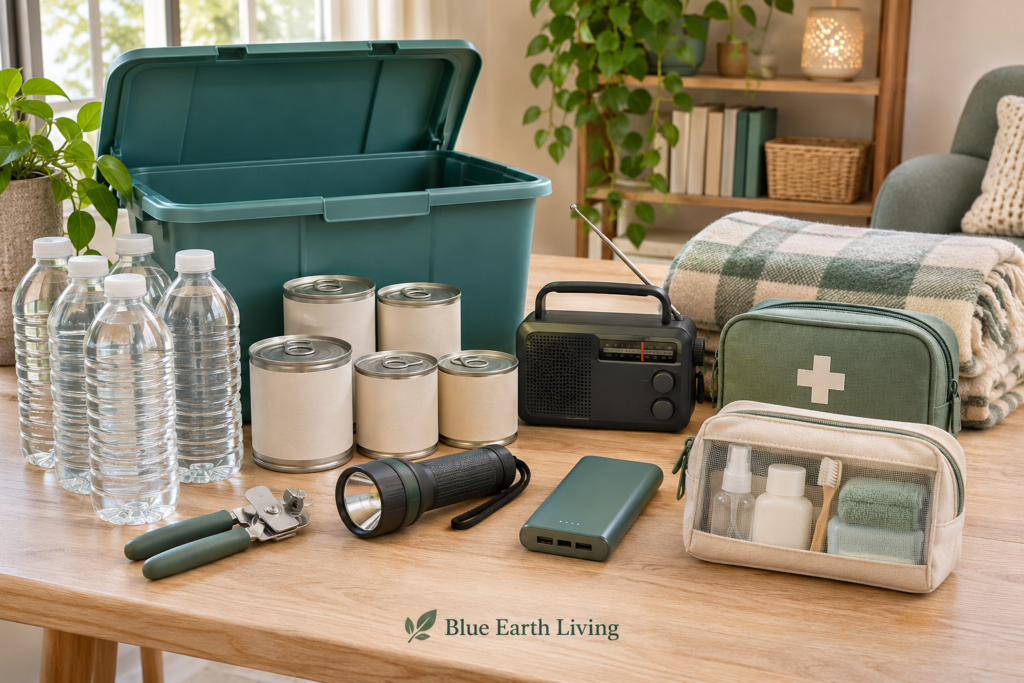
Keep supplies together in accessible, clearly labeled containers. Everyone in your household should know where they are. FEMA recommends supplies for at least three days; extend that reserve where local guidance or your circumstances call for it.
- Drinking water: Store at least one gallon—about 3.8 liters—per person per day for drinking and sanitation. Three days for four people means at least 12 gallons. Add water for pets and allow more for hot conditions or individual needs.
- Food: Choose shelf-stable foods your household already eats, including options that require no cooking. Include a manual can opener.
- Lighting: Pack flashlights or headlamps and spare batteries. Battery-operated lights avoid the open flames of candles.
- Information and communication: Include a battery-powered or hand-crank radio, phone cables, charged power banks, and a written contact list.
- First aid and personal essentials: Include a first-aid kit, necessary medicines, glasses, hearing-aid batteries, and hygiene supplies. Discuss emergency medication supplies, refrigeration, and backup power for medical devices with your pharmacist or care team.
- Clothing and bedding: Add sturdy shoes, weather-appropriate layers, rain protection, and blankets.
- Sanitation: Include soap, hand sanitizer, toilet paper, wipes, garbage bags, and menstrual products.
- Documents and money: Protect copies of identification, insurance information, essential health details, spare keys, and some small bills in a waterproof pouch.
- Household-specific supplies: Pack infant feeding supplies, diapers, mobility or communication aids, and pet food, leashes, carriers, and records.
- Simple comfort items: A familiar toy, book, or small game can help children cope with disruption.
Build your supplies gradually if your budget is tight. An organized kit made from useful items you already own is a practical place to begin.
Keep a Smaller Kit in Your Vehicle
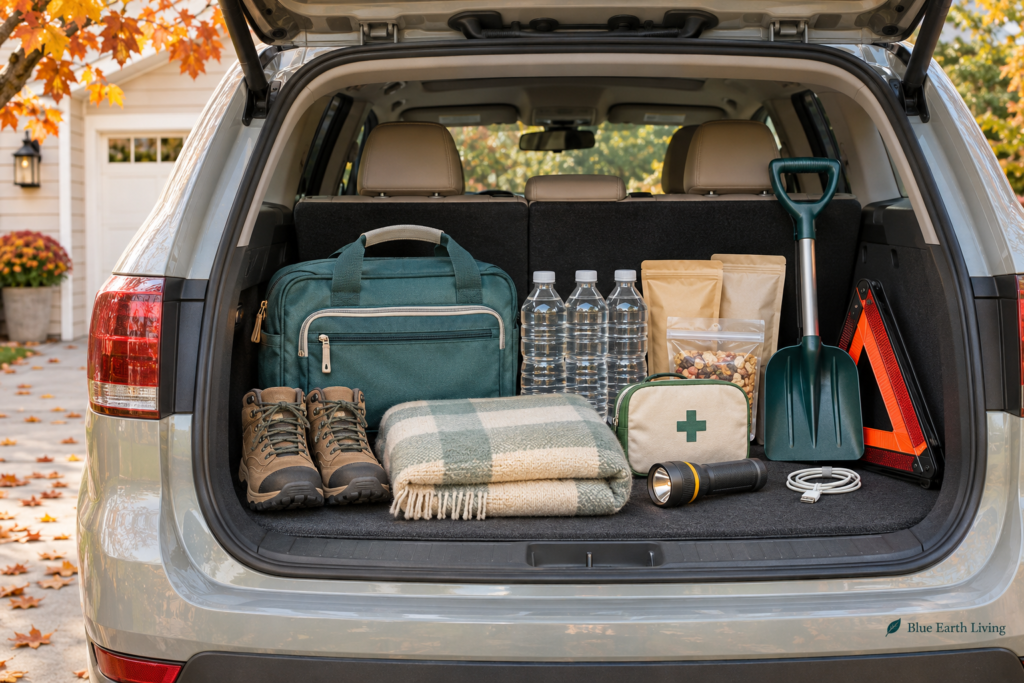
A vehicle kit should support you if travel is unexpectedly delayed. Include:
- Water and ready-to-eat snacks.
- A flashlight, spare batteries, phone charger, and power bank.
- First-aid supplies, blankets, rainwear, and sturdy walking shoes.
- Reflective warning triangles or another battery-powered roadside warning device.
- A paper map, emergency contacts, and roadside assistance information.
- Seasonal equipment, such as an ice scraper and small snow shovel.
- Supplies for children, pets, or passengers with additional needs.
Inspect the kit regularly. Vehicle temperatures can damage medicines, batteries, food, and water containers; follow storage instructions and replace affected items. Keep fuel or battery charge sufficient for an unexpected change of route.
Make a Household Plan Before You Need It
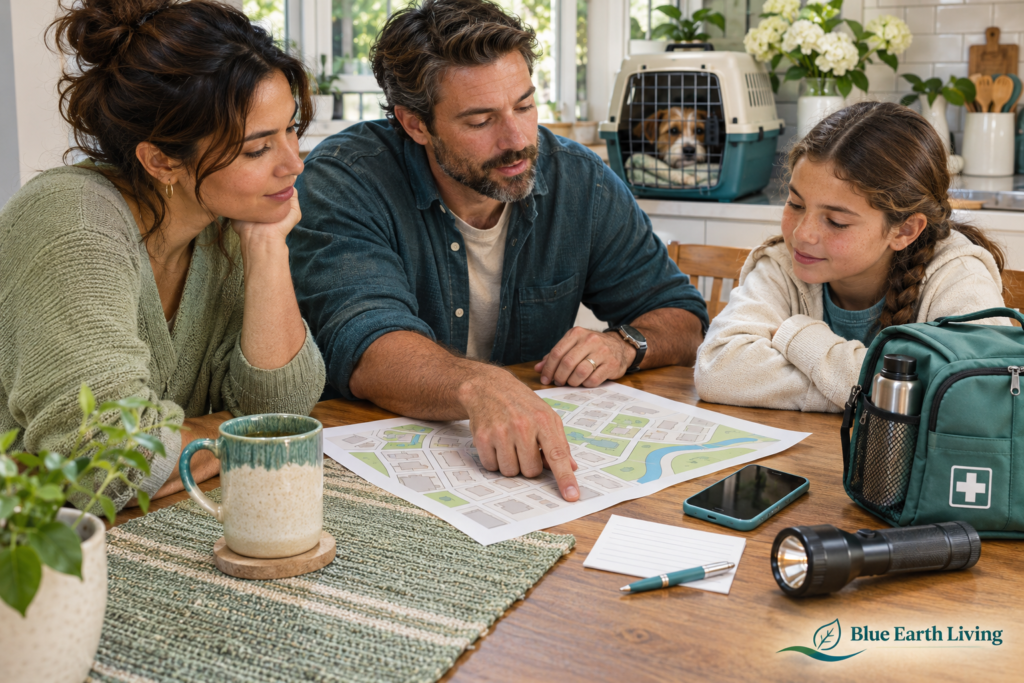
Choose a meeting place near home and another outside your immediate neighborhood. Identify an out-of-area contact who can help relay messages.
Plan more than one evacuation route and identify places you could stay. Confirm accessibility, transportation, and pet arrangements ahead of time. Keep a small grab-and-go bag ready with documents, essential supplies, chargers, and personal necessities.
Practice the plan calmly with children. Explain who will help them, where they should go, and how the household will reconnect.
When Conditions Change, Act Early
Follow official updates. Enable local emergency alerts and monitor your national weather service or emergency management agency. Keep a radio available in case internet access fails.
Respond to the specific hazard. Sheltering indoors, moving to higher ground, and evacuating are different actions. Follow the instructions for your location and the threat involved.
Leave promptly when ordered. Do not delay evacuation to gather possessions. If water is rising around you, move toward safety immediately and seek emergency help if trapped.
Avoid floodwater. Never walk or drive through flooded roads or bypass barricades. Water can hide damaged pavement, electrical hazards, and strong currents. Turn around and use a safe alternative route.
Treat outages carefully. Use flashlights, conserve phone power, and seek an appropriate shelter if your home becomes dangerously hot or cold. Keep away from downed power lines and report them to the utility or emergency services.
Prevent carbon monoxide poisoning. Never operate fuel-burning generators inside a home, garage, or enclosed space—even with doors open. CDC advises placing portable generators outdoors more than 20 feet from windows, doors, and vents. Use battery-backed carbon monoxide alarms, and never use a grill, camping stove, or gas oven to heat your home.
Check on others when safe. A brief call can help an older neighbor, someone living alone, or a person who needs transportation get support. Avoid entering dangerous areas to help; contact emergency services when needed.
Keep Preparedness Part of Everyday Life
Review your kit at each seasonal change and after every use. Replace expired supplies, recharge power banks, update contacts, and adjust clothing and household essentials.
Use food before it expires and replenish it through your normal shopping routine. This reduces waste while keeping your supplies useful.
At Blue Earth Living, we encourage small, affordable steps that strengthen everyday wellbeing. Start today by gathering water, a flashlight, essential contacts, and a few shelf-stable meals—then build a plan your household understands. Download the Free Prepping Checklist below to make sure you have the essentials needed.
For immediate danger, contact your local emergency services. Local evacuation orders and emergency instructions take priority over general preparedness advice.

FREE
PrepPing
CHECKLIST
Be Prepared Starting Today
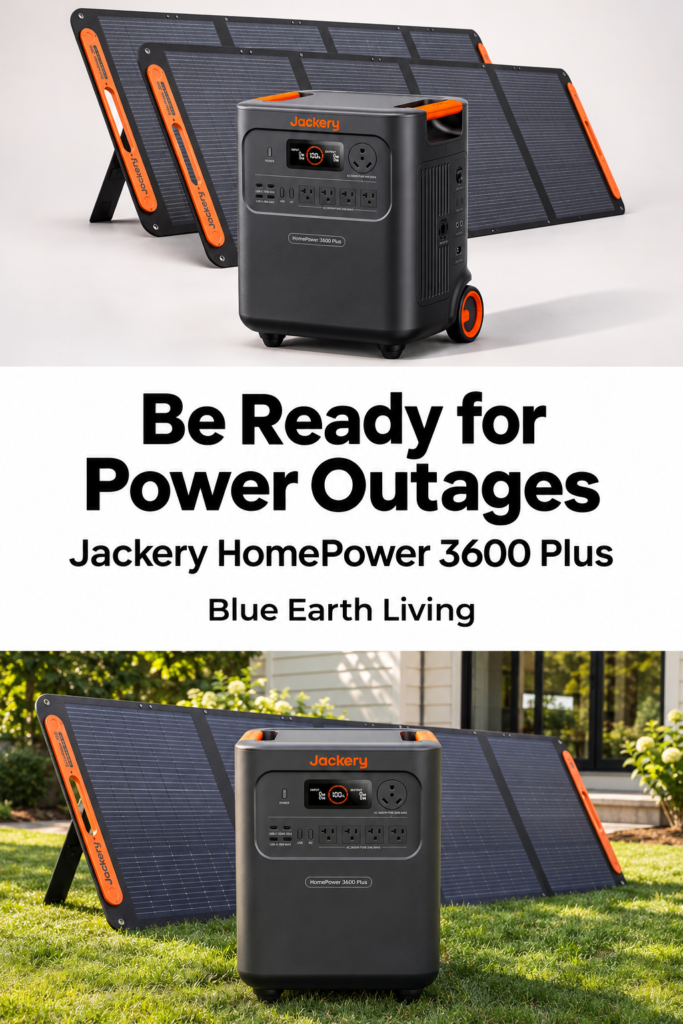
Solar Power Generator
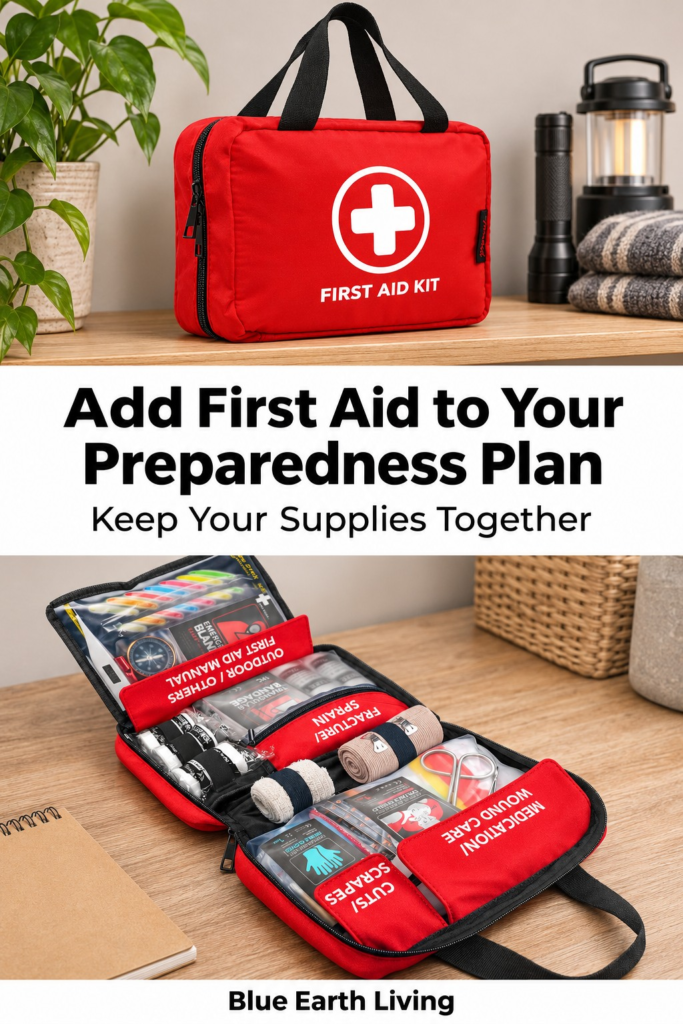
First Aid Kit
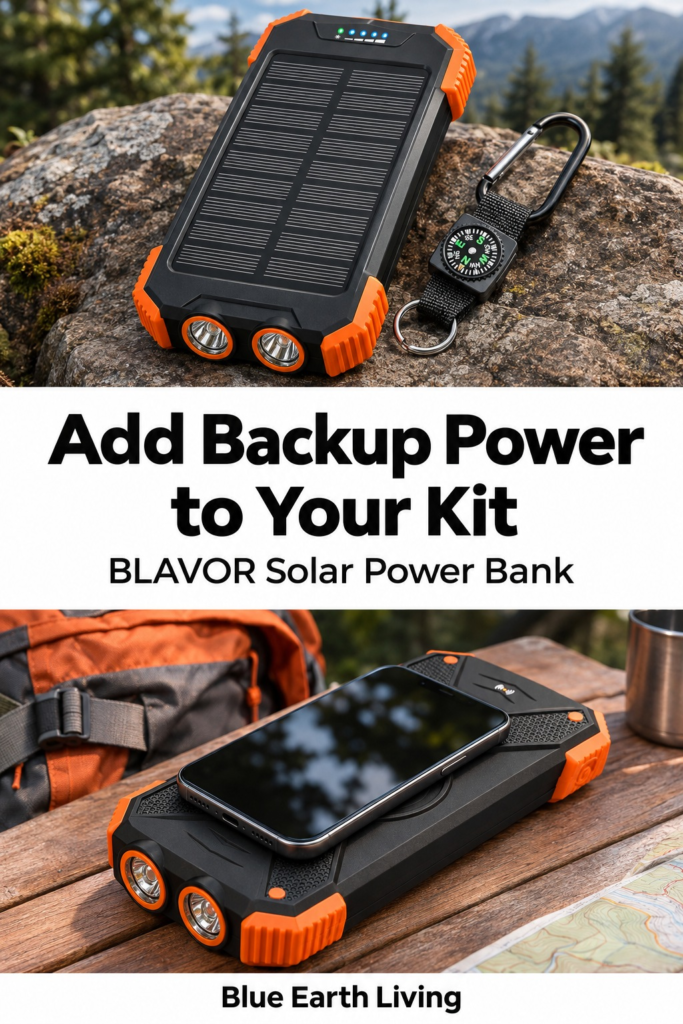
Solar Power Bank
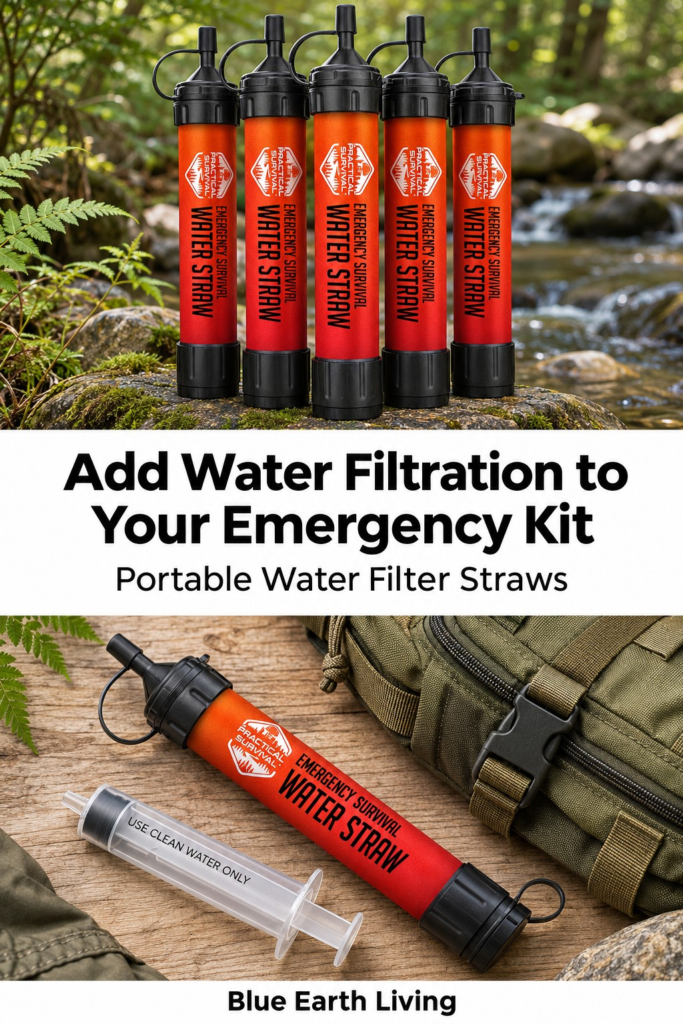
Portable Water Filter Straws
Leave a Reply